English
  日本語
日本語  français
  Deutsch
  Español
  русский
  português
  العربية
  tiếng việt
  বাঙালি
  हिंदी
हिंदी 


In every electrical system—whether it’s a household wiring network, a commercial facility, or an industrial power distribution line—safety and reliability are essential. One of the most vital components ensuring that safety is the circuit breaker. Often referred to as the “guardian” of electrical systems, a circuit breaker automatically interrupts the flow of current when it detects a fault, protecting equipment, wiring, and people from damage or danger.
But how exactly does a circuit breaker work? And why is it indispensable in modern electrical installations? Let’s explore the function of a circuit breaker, its types, and the crucial role it plays in protecting electrical circuits.
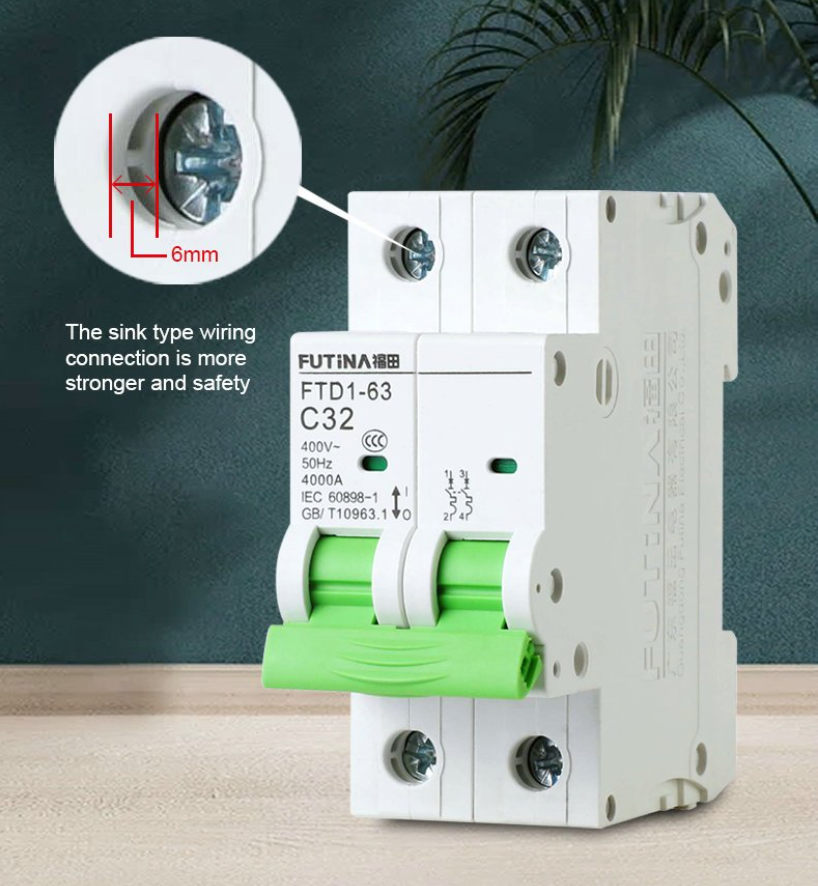
1. What Is a Circuit Breaker?
A circuit breaker is an automatic electrical switch designed to protect an electrical circuit from damage caused by excess current resulting from overload or short circuit. Unlike a fuse—which must be replaced after it operates—a circuit breaker can be reset manually or automatically, making it a more convenient and reusable safety device.
Modern circuit breakers, like those offered by Futina, are engineered for efficiency, reliability, and precision. They combine compact design with advanced safety mechanisms, ensuring consistent performance in both residential and industrial environments.
2. The Primary Function of a Circuit Breaker
At its core, the main function of a circuit breaker is to interrupt current flow in the event of a fault condition. This interruption protects both electrical components and users from potential hazards such as electrical fires, shocks, or equipment failure.
The breaker constantly monitors the current flowing through the circuit. When the current exceeds the breaker’s rated capacity—due to an overload or a short circuit—the breaker trips, automatically disconnecting the circuit from the power supply. Once the issue is resolved, the breaker can be reset, restoring the system to normal operation.
In summary, the circuit breaker performs three essential functions:
Detection: Identifies abnormal current flow.
Interruption: Breaks the circuit instantly to stop the fault current.
Restoration: Allows the circuit to be safely reconnected once the issue is cleared.
3. Key Types of Circuit Breakers
Different electrical environments require different types of circuit breakers. Common categories include:
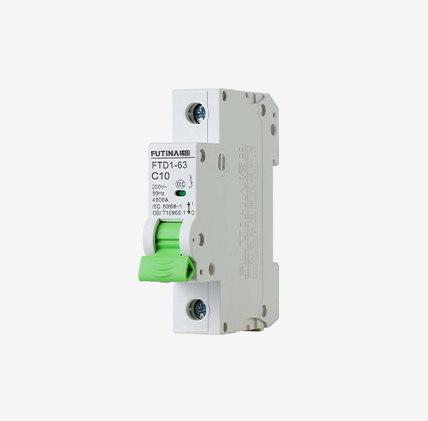
Miniature Circuit Breaker (MCB):
Designed for low-voltage applications, MCBs protect against overloads and short circuits in lighting and household circuits. They are widely used in homes, offices, and small commercial systems.Moulded Case Circuit Breaker (MCCB):
Used for higher current ratings, MCCBs provide adjustable trip settings, making them suitable for industrial and large commercial installations.Residual Current Circuit Breaker (RCCB):
RCCBs detect leakage current and protect against electric shock, ensuring human safety by cutting off the circuit when a leakage fault occurs.Residual Current Circuit Breaker with Overload Protection (RCBO):
A combination of MCB and RCCB functions, RCBOs offer both overload and leakage protection in one device.
Futina’s range of circuit breakers includes all these types, engineered with high breaking capacity, flame-retardant casing, and precise trip mechanisms that ensure stable performance in all environments.
4. Working Principle of a Circuit Breaker
The operation of a circuit breaker depends on both thermal and magnetic effects of electric current.
Thermal Tripping:
A bimetallic strip inside the breaker bends when it heats up due to prolonged overcurrent. This bending action triggers the trip mechanism and opens the circuit.Magnetic Tripping:
During a short circuit, a sudden surge of current generates a magnetic field strong enough to move a lever, instantly opening the contacts and breaking the circuit.
These two mechanisms work together to provide fast, reliable protection—whether the problem is a gradual overload or an instantaneous fault.
5. Importance of Circuit Breakers in Modern Systems
Circuit breakers are indispensable in modern power distribution for several reasons:
Fire Prevention: By disconnecting circuits under fault conditions, they prevent wires from overheating and igniting.
Equipment Protection: Sensitive electrical devices are safeguarded against voltage spikes and current surges.
User Safety: RCCBs and RCBOs protect people from electric shock, especially in damp environments such as kitchens and bathrooms.
System Reliability: They make maintenance easier—technicians can safely isolate specific circuits without shutting down the entire system.
Futina circuit breakers are designed with high mechanical endurance and stable tripping characteristics, ensuring long-term protection even under demanding conditions.
6. Key Features of Futina Circuit Breakers
Futina’s circuit breakers stand out for their quality craftsmanship and safety performance. Their core features include:
High Breaking Capacity: Ensures effective interruption even under heavy fault conditions.
Durable Housing: Flame-retardant and impact-resistant materials enhance product longevity.
Precise Trip Mechanism: Provides reliable operation and minimizes nuisance tripping.
Compact Design: Ideal for modern distribution boards with limited space.
Comprehensive Range: Available for residential, commercial, and industrial applications.
These attributes make Futina circuit breakers a dependable choice for electrical contractors and system designers seeking both performance and safety.
7. Maintenance and Testing
To ensure continuous protection, circuit breakers should be periodically tested. Simple checks, such as verifying mechanical operation or performing trip tests, help confirm that the breaker functions correctly. Futina recommends following standard maintenance schedules and replacing any breaker showing signs of wear, overheating, or mechanical damage.
8. Conclusion: A Silent Protector You Can Trust
Although small in size, the circuit breaker plays a massive role in safeguarding lives, property, and equipment. By detecting faults and cutting power at the right moment, it ensures the safe and stable operation of every electrical system.
From homes to factories, Futina circuit breakers deliver dependable performance, precise protection, and peace of mind. Investing in high-quality breakers is not just a technical decision—it’s a commitment to safety and reliability for years to come.
Table of Content
[Hide]